

By Khin Saw, Cambridge Executive MBA 2024
Endurance challenges often test physical limits, but the 121 km Gobi Desert Race goes far beyond that. It is a test of leadership, adaptability, humility and collective strength, the very qualities that define the Cambridge Executive MBA experience.
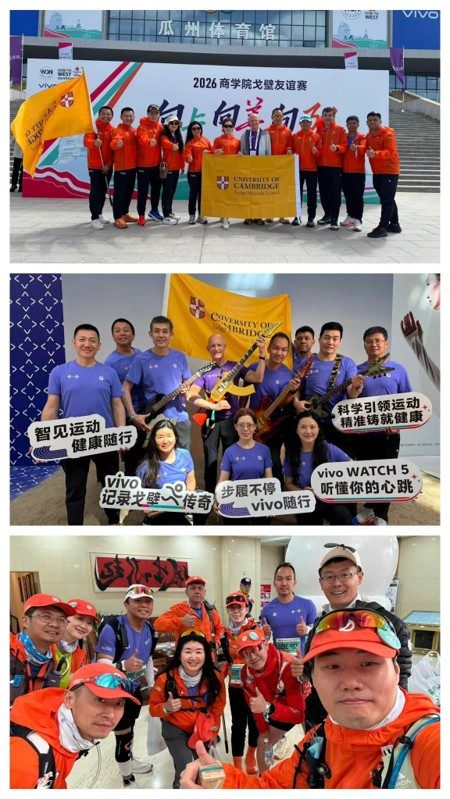
This year, I had the privilege of representing Cambridge Judge Business School, alongside fellow participants and alumni from Cambridge, China Europe International Business School (CEIBS) and Harvard University. Together, we formed a global team united by curiosity, discipline and a shared commitment to push beyond our comfort zones. Our team returned with two awards: the Silver Trophy and the ESG Award, both of which will be presented to Cambridge Judge Business School. The true achievement lies in the journey that unfolded across 4 days in one of the world’s most unpredictable and unforgiving environments.
Gobi: a desert that changes without warning
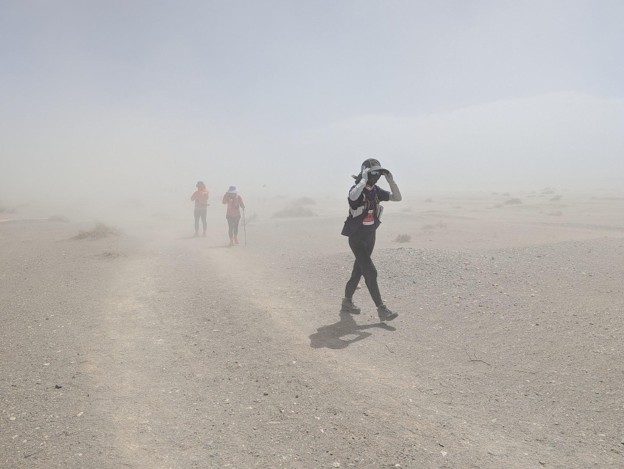
The Gobi Desert is a landscape of extremes: not just in temperature, but in temperament. One moment, the sky is clear and the sun is bright; the next, a sandstorm engulfs the horizon so completely that you cannot see your own five fingers. At other times, the wind becomes so forceful that you must lean forward and push against it simply to stay upright. The terrain itself was equally varied and demanding, shifting constantly between dry cracked mud plains, black volcanic stone fields, shaky wooden bridges, village paths, open desert stretches and deep sandy sections. Every step required careful attention, and the sand was so pervasive that our shoe protectors had to be replaced by Day 2, worn down by the constant abrasion.
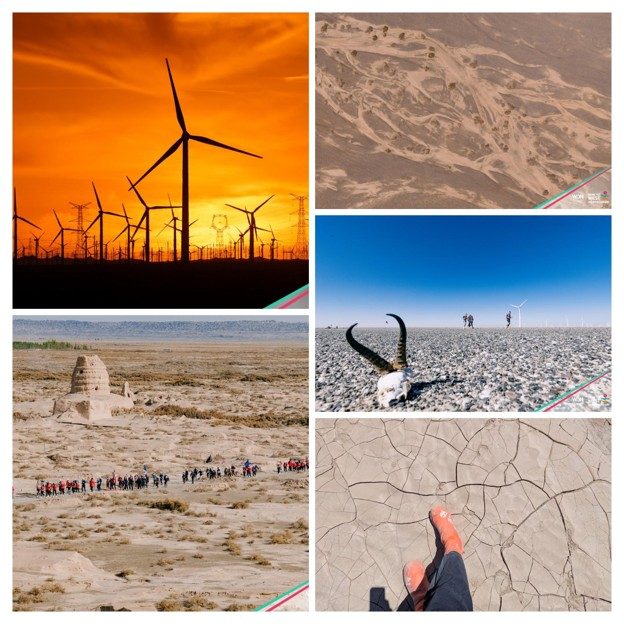
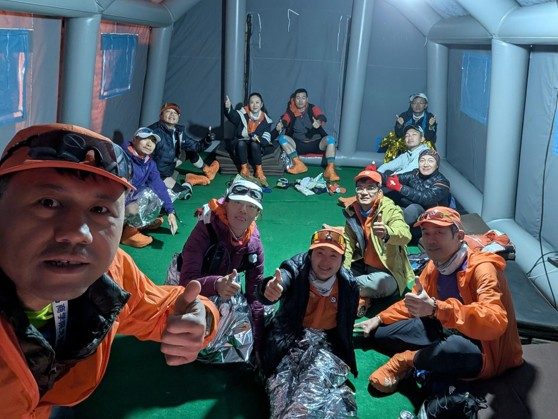
Temperature swings added another layer of complexity. Daytime highs approached 30°C, while night-time temperatures dropped to around 5°C, making rest and recovery difficult, especially when sleeping in tents exposed to the elements. Each day began at 5 am, waking in the cold darkness to pack sleeping bags and all personal belongings by 6 am. With scarce water resources, only cold water was available for brushing teeth and washing faces. There were no showers, no heating and no comforts, a military‑style routine that demanded discipline, mental focus and resilience.
A personal setback and a lesson in resilience
On Day 2, midway through the race, I experienced a significant setback. I fell unwell due to a combination of heat, fatigue and physical strain. It was the moment that tested me most deeply. There was a point where I questioned whether I could continue. But I had prepared for this race not only for myself, but for my team. While the Gobi race is a collective endeavour, each of us carried a unique responsibility and, for me, that meant showing up every day with resilience, encouragement and a commitment to the team’s spirit. Therefore I made the decision to continue, not only for myself, but because I knew that every finisher mattered to the team’s overall standing.
As one of the 3 women in the team, I also felt a responsibility to represent our strength and presence. We supported one another through the heat, the sandstorms, the cracked mud and the long hours — and our determination became a source of motivation for the wider group.
Also, leadership is not always about being the strongest; sometimes it is about accepting support. My teammates from Cambridge, CEIBS and Harvard encouraged me, paced with me and ensured I reached the finish line. On the other hand, I carried medicine throughout the race in case anyone needed it, and one team mate did need the painkiller in order to finish the race on the day. Supporting others reminded me that leadership is not always loud; sometimes it is the quiet act of being ready, being steady, being there and helping others keep going too.
These experiences reinforced a central Executive MBA principle: leadership is a collective endeavour. We rise higher when we rise together.
A team culture built on support and shared rituals
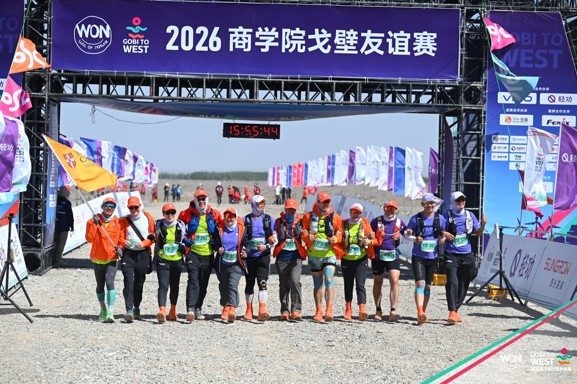
One of the most inspiring aspects of the race was our team culture. Members who finished early would wait at the finishing point to cheer on and welcome those arriving later, ensuring no-one crossed the line alone. After each stage, once everyone had returned, we gathered in the tent for our recovery routine: stretching, after‑run exercises, and even facial mask treatments to soothe the heat and dryness of the day. Yes, even the men participated. These moments of shared recovery brought humour, connection and a sense of community that carried us through the toughest stages. I made it a point to support others emotionally, especially on days when spirits dipped. Encouraging teammates, sharing supplies and helping maintain a positive atmosphere became part of my contribution to the team’s strength. These rituals reflected the Executive MBA spirit: collaboration, humility and the understanding that leadership is strengthened through shared experience.
Leadership behind the scenes: coordination, care and commitment
The success of our team was not only shaped on the racecourse, it was built long before we arrived in the desert. Our team leader Amy (Xunzhe Zhang), together with Ran Bao and Michael Yang, coordinated the entire team itinerary from the moment the group was formed. They handled every detail like logistics, communication, preparation schedules and ensuring that every participant knew exactly what to expect each day. Despite falling ill herself on Day 3, Amy continued to lead with unwavering commitment. She attended every evening team meeting, ensured our needs were met, and was there cheering for us at the start line each morning and at the finish line each afternoon. Her resilience and dedication set the tone for the entire team.
Ran Bao, who is not a racer but came as Amy’s partner, went above and beyond to support us. He ensured that everything we needed was in place and on time, acted as our photographer, cheerleader, organiser and morale booster, often all at once. His dedication demonstrated that the spirit of the race is found not only in the kilometres we run, but in the countless details that make the journey possible.
Race strategy: precision, safety and team‑centred leadership
The Gobi race uses a unique team‑based scoring system in which the No. 6 finisher’s time determines the team’s official result, and the No. 5 finisher must finish within 15 minutes of the No. 6 runner. Lastly, all team members finish the race within the time frame. This structure means that success depends not on individual speed, but on collective pacing, health management and strategic coordination.
Every morning, Ran Bao assessed each runner’s condition: energy levels, injuries, recovery and mental readiness, and coordinated the day’s race strategy accordingly, always prioritising health first and pushing for performance only when it was safe to do so. To maintain the required time window, our faster runners – Cambridge Executive MBA alumni Leo Wang, Michael Yang, Mingke Jiang and CEIBS alumni AnYi, Wang Hao, Ar Du and Pang Zang – set a strong, steady pace at the front, ensuring that the team remained competitive while protecting the wellbeing of all members.
Meanwhile, the remaining runners, including the 3 of us women (Amy and Clare from Harvard) were supported by Steven Zhu (Cambridge Executive MBA alum), who stayed with us throughout each stage. He ensured that no-one was left behind, monitored our pace and kept us safely within the required time frame. Using walkie‑talkies, he stayed in constant communication with the front group, adjusting speed and spacing as needed. This dual‑layer strategy of a strong front group and a protected support group exemplified leadership in action: coordinated, thoughtful and centred on collective success.
A Cambridge lecture in the middle of the desert
Thanks to months of coordination by Michael Yang, working closely with Executive MBA Director Dr Jennifer Waller Martin MInstLM, we were able to welcome Professor Simon Taylor into the desert. A highlight of the event was a tent lecture delivered by Professor Simon Taylor in the Gobi’s makeshift ‘lecture hall’. Against the backdrop of vast desert landscapes, Professor Taylor spoke about Europe’s evolving relationship with the world, offering geopolitical insights that felt especially relevant in today’s global climate. To all our surprise, not only did he deliver the opening of his lecture in Chinese – a gesture that moved many of us – but he also joined us on Day 1 of the race, experiencing first-hand the terrain and conditions we were navigating. It was a surreal moment, a reminder that the Cambridge learning experience is not confined to classrooms. It travels with us, shapes us and becomes part of how we interpret the world, even in the most remote environments.
A diverse community of leaders — all humble, all equal
The Gobi race brings together participants and volunteers from all walks of life like entrepreneurs, senior executives, CEOs and race sponsors, yet everyone is humble, grounded and united by the same goal: to finish the race with integrity. One of our teammates, a CEIBS alumnus and the founder and CEO of Qin Gong, a well‑known professional sportswear brand in China, was a perfect example. Despite his success, he was approachable, supportive and fully immersed in the team spirit. He also generously sponsored all our race clothing, ensuring we were equipped for the extreme conditions. This diversity and humility created an environment where leadership was not defined by titles, but by actions.
Bringing home two awards for Cambridge
Our team’s performance was recognised with two honours: the Silver Trophy for overall team achievement and the ESG Award for demonstrating strong environmental, social and governance values throughout the 4-day race. Both awards will be presented to Cambridge Judge Business School, symbolising our gratitude and our commitment to representing the school’s values on a global stage.
A leadership journey beyond the classroom
Completing the Gobi Desert Race was one of the most demanding experiences of my life. The extreme weather, the military‑style routine, the personal setback and the relentless terrain pushed me far beyond my comfort zone. But it also reaffirmed the essence of the Cambridge Executive MBA: resilience in the face of uncertainty, adaptability when conditions change without warning, teamwork that transcends backgrounds and institutions, and leadership grounded in humility, empathy and shared purpose.
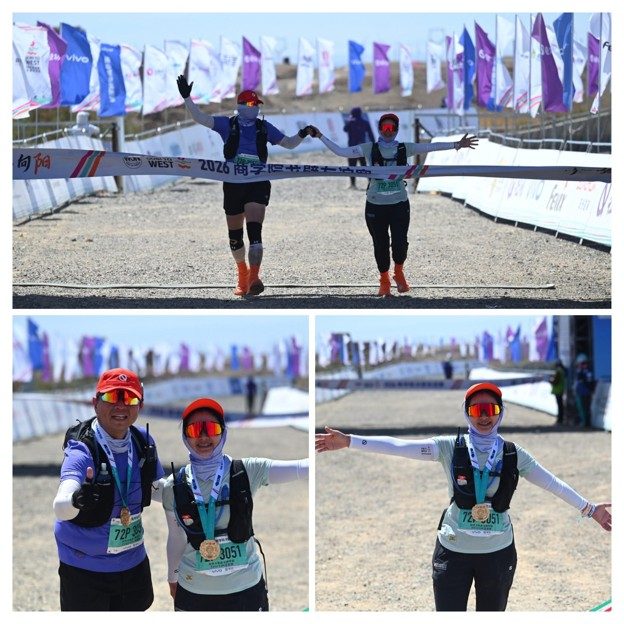
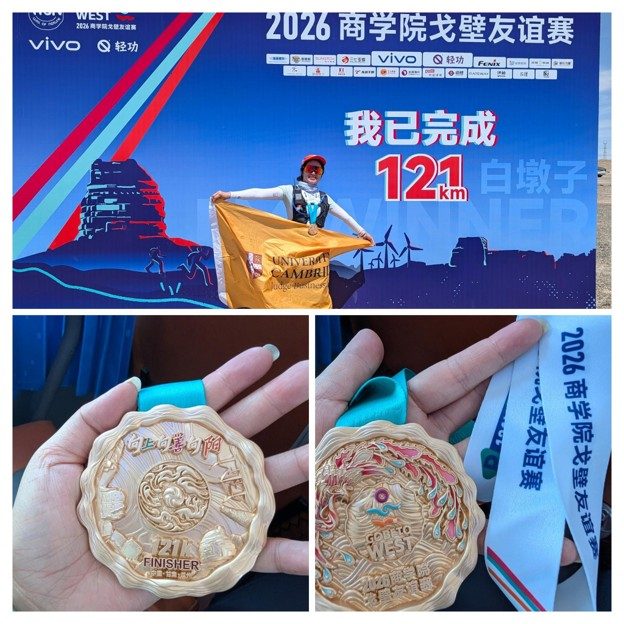
The Gobi Desert tested every part of me, physically, mentally and emotionally, yet it also strengthened my appreciation for the Cambridge community and the mindset we carry. Having crossed the Gobi, I now feel prepared to face almost any setback or challenge life may throw at me. I may not always know the solution immediately but I will keep trying, keep adapting and keep moving forward. I am proud to have represented Cambridge across all 121 kilometres, and even prouder to bring the spirit of the Executive MBA into one of the world’s toughest environments.
Leave a Reply