

By Swoyanshree, Global Executive MBA 2026
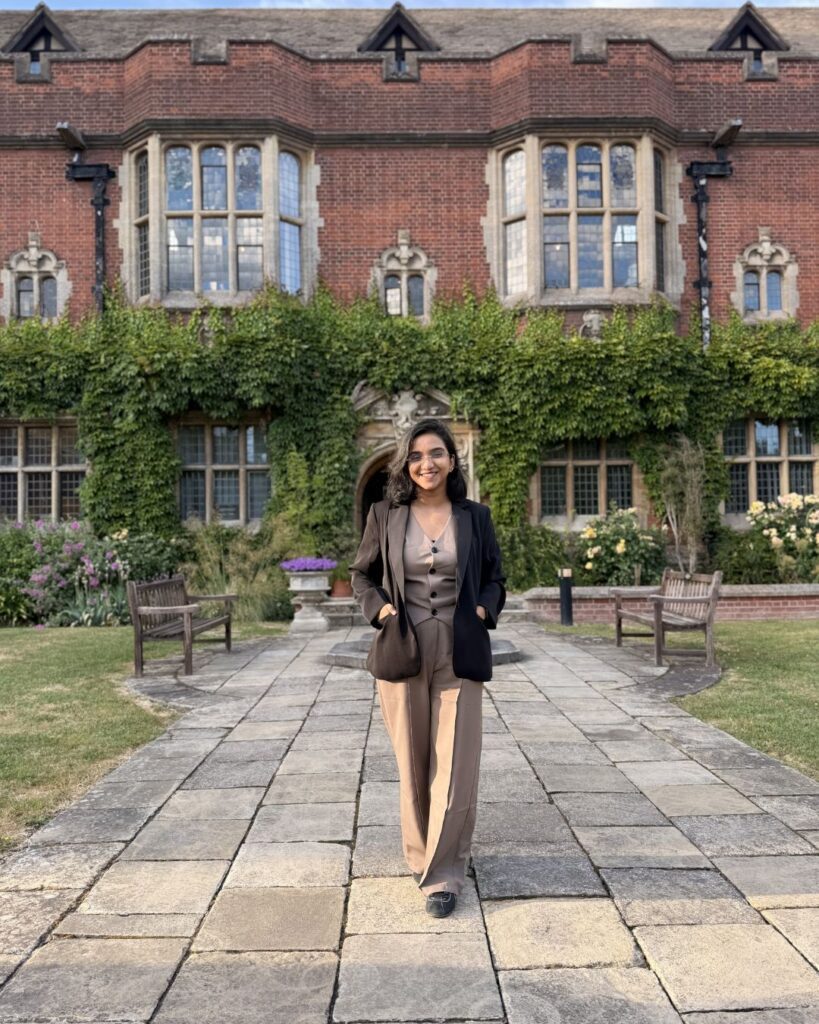
Expertise made me confident. It also made me predictable.
For years, I wanted to pursue an Executive MBA. Not because everyone around me was doing it. Not
because I thought letters after my name would define my career. I wanted it because I
believed there was another level of thinking I hadn’t reached yet.
Ironically, the longer I worked, the harder that decision became, because the better I got at
my job, the harder it became to notice that I was solving the same kinds of problems, with
the same kinds of people, in the same kind of way. I just didn’t have a name for it yet.
This wasn’t the first time I’d come close. Straight after my undergrad, I was admitted to 5
top UK business schools (LBS, Warwick, Bath, Edinburgh, Cranfield) for a Master’s in
Management. Then COVID happened, and that door closed. Looking back, I think it closed at
the right time, because the version of me that applied then wasn’t the version of me writing
this now.
When I began my career, an Executive MBA felt like the obvious next step. But as the years passed,
work itself became my classroom. Consulting engagements exposed me to new business
models. Product launches turned into live case studies. Stakeholder meetings sharpened my
negotiation instincts. Difficult decisions taught me things no textbook could.
Somewhere along the way, I stopped asking when I would pursue an Executive MBA and started
asking a different question: if work is already teaching me all of this, what exactly is an Executive MBA
going to add?
It wasn’t a question of ambition. It was a question of relevance. Like many professionals, I
convinced myself that experience was enough. Promotions came. Responsibilities grew. The
learning never really stopped.
Or so I thought.
Looking back, architecture never really left me
People assume architecture teaches you how to design buildings. I think it teaches you how
to understand people. Long before consulting or product management, architecture had
already taught me how to balance conflicting priorities, defend ideas without becoming
defensive, embrace constraints instead of resisting them, and accept that the first solution is
rarely the best one.
Every design review was an exercise in communication. Every client conversation required
empathy before creativity. Every project reminded me that great solutions emerge through
iteration, not inspiration.
When I transitioned into consulting, people saw it as a career change. I see it differently. I
wasn’t changing careers – I was expanding one. The problems became digital instead of
physical. Buildings became products. Clients became stakeholders. Design reviews became
roadmap discussions.
The thinking stayed surprisingly similar.
Why Cambridge?
When I finally decided to pursue an Executive MBA, I wasn’t searching for prestige, a ranking, or even
a qualification. I was searching for people who would challenge how I think.
One thing consulting taught me is that experience compounds. But so do assumptions. The
longer you work in one industry, the easier it becomes to believe your way of solving
problems is the way of solving them. Success reinforces patterns. Expertise builds
confidence. Before you realise it, your professional world becomes an echo chamber: not
because people disagree less, but because they often share the same context.
I didn’t need another framework. I needed different perspectives. That’s what drew me to
Cambridge. Not the lectures. The people.
The surprise wasn’t in the classroom
Before joining the programme, I imagined the biggest learning would come from the
curriculum. It didn’t. It came from the conversations between sessions, the debates that
spilled over coffee, and the moments when someone from a completely different industry
dismantled an assumption I didn’t even know I was carrying.
A healthcare executive approached growth differently from someone in manufacturing. An
entrepreneur questioned certainty in ways a corporate leader rarely would. A finance
professional interpreted risk differently from someone building technology products.
None of us were trying to convince the other. We were simply exposing each other to
different ways of seeing the same problem. It reminded me that diversity isn’t only about
backgrounds: it’s about thought. And thought diversity is difficult to replicate in the
workplace, where industries, organisational cultures and shared experiences naturally shape
how teams approach problems.
What surprised me most
I started this journey expecting new knowledge. Instead, I found new questions.
Work had taught me how to execute, influence and deliver. Cambridge challenged me to
pause before any of that and ask whether I was solving the right problem in the first place.
Some of the most valuable moments over the past six months haven’t been about finding
answers. They’ve been about becoming comfortable with uncertainty, and recognising that
intelligent people can look at the same situation, work with the same facts, and still arrive at
entirely different conclusions.
As professionals, we often measure growth by how quickly we can provide answers. This
experience has reminded me that growth is just as much about asking better ones.
Would I still have learnt without an Executive MBA?
Honestly? Yes. Work would have continued to teach me. Clients would have continued to
challenge me. Projects would have continued to stretch me.
But work teaches through experience. An Executive MBA teaches through perspective. Those are not
the same thing, and six months ago, I’m not sure I could have told you why that distinction
mattered so much.
If you’re someone who’s been postponing an Executive MBA because your career already feels like a
business school, I understand. I spent years telling myself the same story. Looking back, I
didn’t pursue an Executive MBA because I had stopped learning. I pursued one because I wanted to
make sure I never stopped questioning how I learn.
Six months in, that’s been the biggest lesson of all. I’m curious what the next 6 will unteach
me.
Leave a Reply