

By Abisayo Busari-Akinnadeju, Global Executive MBA 2024
This post sits across women in career, women in leadership, and the many planned and unplanned life choices that may deter a woman from completing what she set out to do. Worth noting from the outset, everyone can do this, and much more, if the support is there.

A woman’s journey is laden with choices and decisions that may naturally position her for a disadvantaged position. I do not say this as complaint. I say it as fact, observed over many years of navigating industries and sitting on boards where I was the only woman in the room.
I came to Cambridge already carrying a great deal.
I had my background in law. An LLM from King’s College London, and here I was, about to set out on the Global Executive MBA at one of the world’s leading universities. At my interview, I told the panel plainly that I was coming to deepen my knowledge of macroeconomics and microeconomics in preparation for contesting the office of the Nigerian presidency at some point in the future (that is a journey started but a story for a later time).
On a second layer, I had already taken varied courses from Harvard Business School Online and Harvard Kennedy School on leadership and strategy. I did not want to bring just legal perspective to leadership but an all-round balanced view. I concluded that the missing link was the rigour of a leading business school.
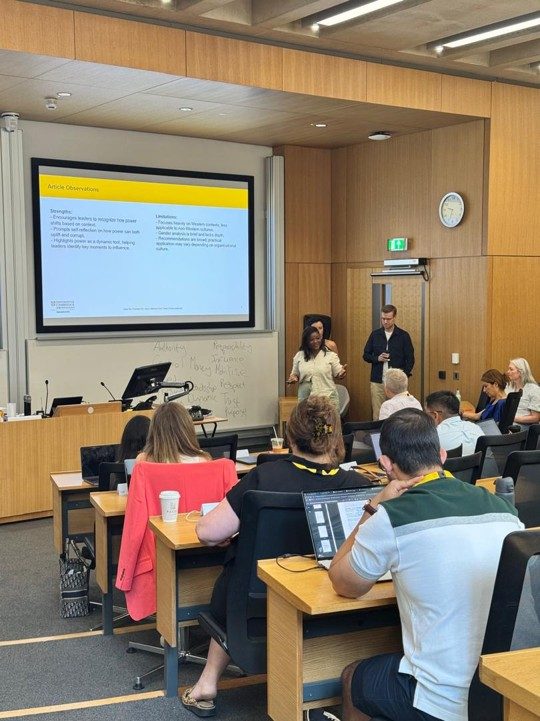
I arrived at Cambridge with so much enthusiasm.
I was pregnant halfway through the programme. I had not yet commenced my 2 international business study trips, and I had a choice to make. To wait, or to go on.
Let me be clear about something before I go further. This is not, in any way, a case of pausing being weakness. Those who pause are not less strong. We do not all carry the same stories, the same support systems, or the same circumstances. Pregnancy is one of life’s experiences that affects women and men alike, men stop to be with their wives. Some could not afford, financially or otherwise, to continue a programme like this one at the same time. There is no single correct response to an unplanned chapter arriving in the middle of an already demanding one.
I chose to go on and I want to be honest about why I could.
With family behind me. My children hailing me on. My classmates reassuring me at every turn. My lecturers and teaching team nodding when it mattered most, in the room, in real time, when I needed to know I was not imagining my own competence. I scaled through.
Personal strength, yes, but support, yes also! Together, not one without the other.
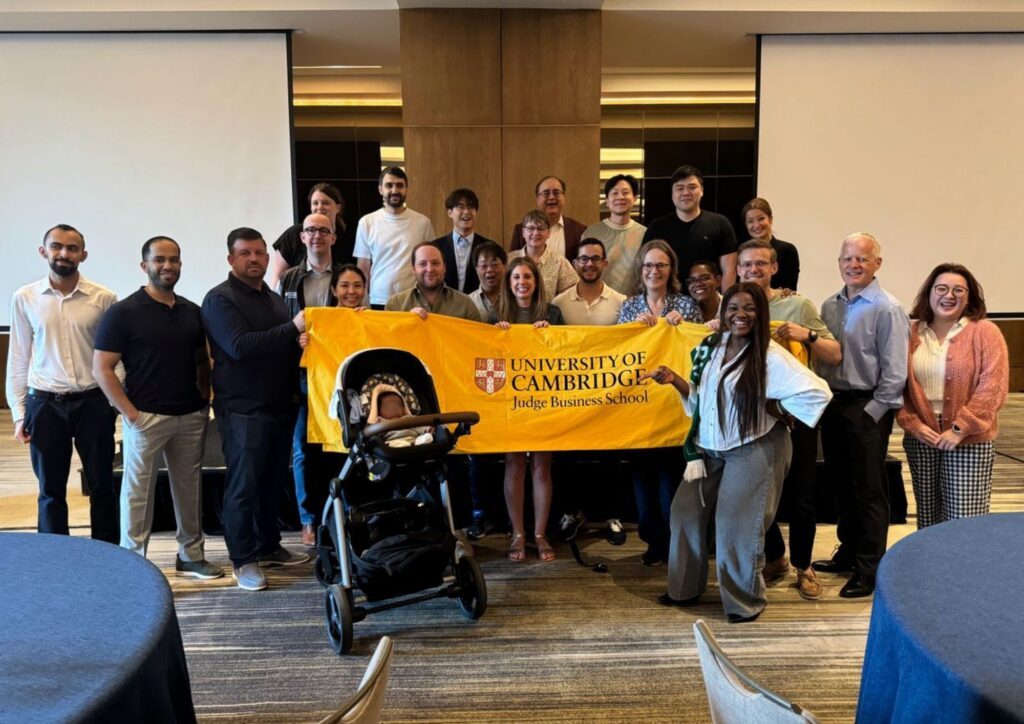
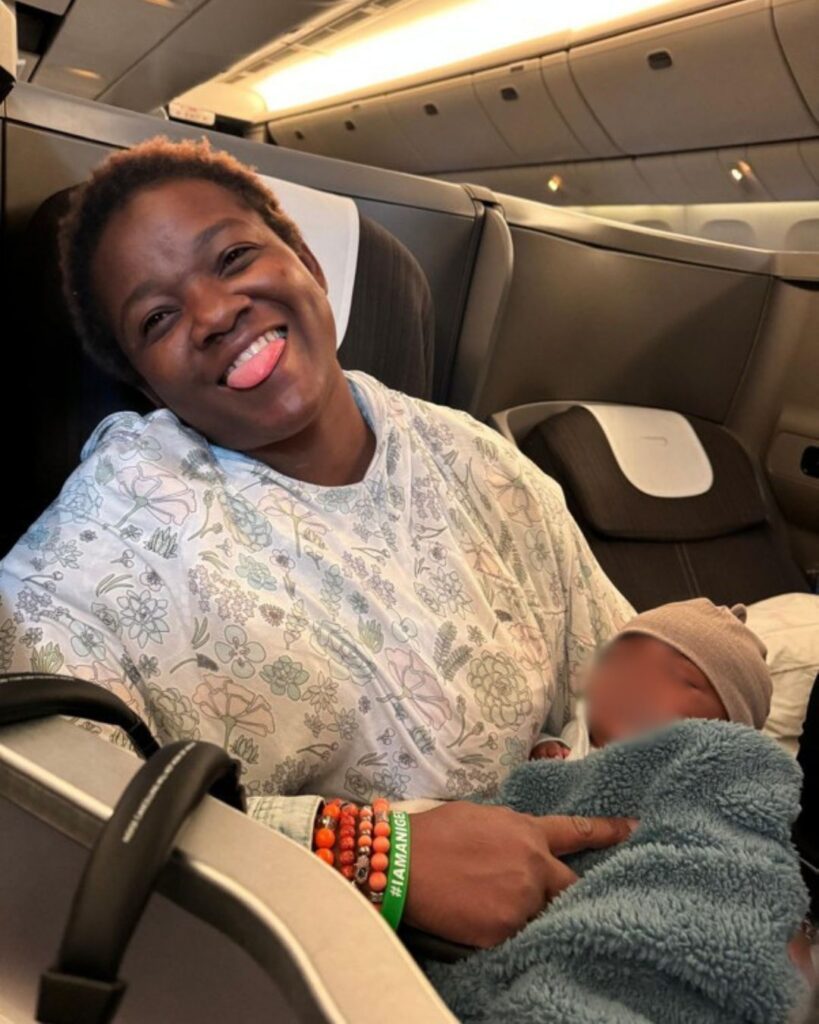
My son was 7 weeks old when we had to travel to Mexico City for the second of my international business study modules.
I went. Baby in a pram. Programme materials in my bag. A Nigeria scarf around my shoulders, because some things travel with you regardless of where the syllabus takes you.
He came to class, surrounded by classmates and faculty who did not treat him as a disruption to the room but as a quiet, accepted presence within it. That is not a small thing to receive when you are the one wondering, the whole time, whether you have made the right call.
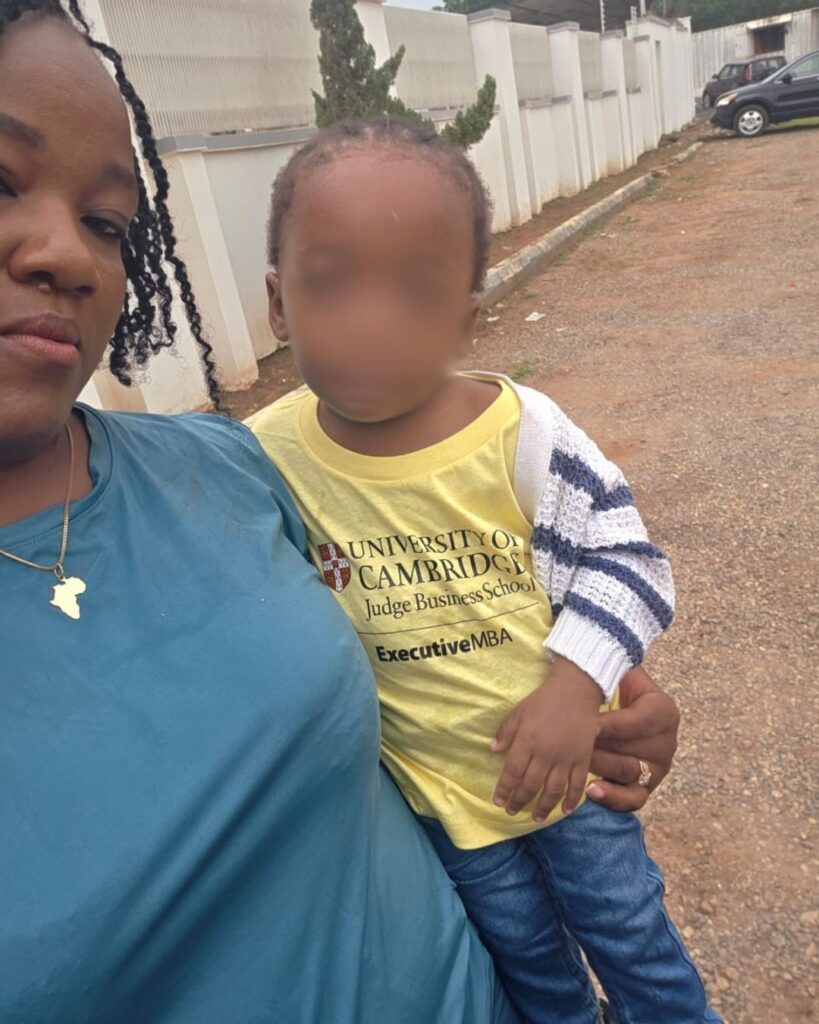
By graduation, the Executive MBA team had thought of something I did not expect. A gift for my son, a Cambridge Judge Business School Executive MBA t-shirt, his size. Thoughtful enough to fit and he is wearing it now, at home in Abuja.

So what is the lesson here, beyond one woman’s story?
I want to resist turning this into a tidy framework, because I do not think it is one. There is no theory that fully explains how a woman scales through a great workload, a newborn and the early architecture of a presidential aspiration in the same 20 months. I did not have a model. I had a decision, renewed most mornings, to keep going 1 module at a time.
If I am asked what made the difference, it is this.
Decide early what you are unwilling to let go of. Before Cambridge, before the pregnancy, I already knew why I was there. That clarity did not make the difficulty disappear, but it gave me something to return to on the mornings when stepping back would have been the easier, entirely reasonable choice.
Say the hard thing out loud, early. I told my interview panel exactly why I was coming. My cohort knew from day one. Saying it early meant that when the unplanned arrived, the people around me already understood what I was working toward, and could support the actual goal, not just the immediate crisis.
Accept support without apologising for needing it. This is the one I find women resist most, myself included for many years. There is a script that says strength means doing it alone. I did not. My family adjusted. My classmates reassured me. My lecturers nodded, small gestures that told me my competence was not in question, only my circumstances. None of that makes the achievement less mine. It makes it more honestly told.
To every woman weighing whether to go on through a chapter that arrived uninvited, pregnancy, illness, caregiving, grief, any unplanned turn mid-programme or mid-ambition, I will not tell you going on is always right. Only you know what you are carrying and what you have to carry it with. If you decide to go on, know this: you are not required to do it without help, and accepting that help is not a smaller version of the achievement. It is the achievement, told honestly.
As we stand today, I am often asked, since I began my civic work at The Dare Institute, the non-partisan policy organisation I founded in Nigeria in 2026, what institutions need to do differently to serve women in leadership.
My answer has changed since Cambridge.
It used to be structural. Fix the pipeline. Increase representation. Remove the barriers at entry.
Those things are still true and still necessary, but I now add something that sounds softer than it is:
See the whole person.
See that the woman in your programme may also be a mother. That the man beside her may be a caregiver. That the commitment they have made to be in your classroom is not in spite of everything else they are carrying, it is alongside it. An institution that recognises this, that makes room for it, that gifts a yellow t-shirt to a baby at a graduation ceremony – that institution is doing something that builds loyalty no marketing budget can buy.
It is doing something that changes what a person believes is possible.
I enrolled in the Cambridge Executive MBA because I was preparing to govern Nigeria. I graduated with the technical knowledge I came for, macroeconomics, strategy, finance, leadership under complexity, but I also graduated with something I did not know I needed.
The memory of an institution that did not ask me to choose between the work and the life, The institution that welcomed both into the room. The institution that saw my son not as a complication but as a continuation.
If you are building an institution, a school, a company, a government, a civic body, the question worth sitting with is this:
Who do you see when the person walks through the door – and do they know that you see them?
The answer to that question is the institution’s real curriculum.
Leave a Reply