

By Sunny Chen, Global Executive MBA 2025
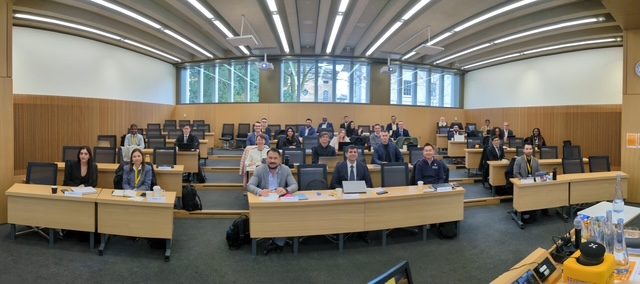
As our Global Executive MBA journey draws to a close, I have found myself returning to reflection as the most meaningful way to celebrate it. Last blog from me! 😊
Since January 2025, a number of prospective candidates, some introduced through the Programme team, others reaching out via LinkedIn, have asked me variations of the same questions: how to balance academic demands alongside senior professional responsibilities and family life; what the cohort experience is truly like; and how the programme shapes one’s career trajectory. While I have shared my honest perspectives, these conversations have also prompted me to listen more closely to their aspirations, constraints and unspoken concerns.
Among the many themes worth writing about, the one that I most want to explore this time is the support systems required for working mothers to undertake a programme like this.
In our cohort of 30, 9 are women, representing approximately 30 percent of the group. Of these 9, 3 are mothers, and I am one of them. It is a privilege to be here. Financial investment is one dimension, but it is not the only or even the greatest barrier. The more significant constraint is structural: the presence or absence of a reliable support system.
It is therefore not surprising that fathers outnumber mothers in programmes of this kind. Many male participants are supported by partners who, by expectation or default, take on a greater share of household and caregiving responsibilities. This arrangement enables their participation and progression. For mothers, the situation is different. Pursuing an Executive MBA requires not only personal commitment, but also deliberate negotiation, planning and redistribution of responsibilities within the home.
And yet, within our cohort, there are reasons for optimism.
There is a quiet but meaningful shift taking place, reflected in the partners and families who have made this journey possible, not only husbands, but wives, fiancées and other family members as well. The programme has demanded sustained effort: weekends given over to readings and assignments; some evenings spent in 4-hour online sessions; weeks away for residentials and international study trips. Behind each participant is a network of support that absorbs these demands – partners who step in, who stay behind, who reorganise their own commitments and, in some cases, who travel alongside to share in parts of the experience.
This form of support is intentional, and it is powerful. It is a quiet and generous form of love!
In my own case, I could not have completed this without my husband. Despite the pressures of his own demanding role, he stepped in fully and without complaint, giving me the space to have the best possible experience. Every time I came home from Cambridge, there were 3 new Lego sets waiting, all built with our children while I was away. 😊 These moments carry a deeper significance: they represent time, presence and partnership.
As I think about future candidates who will ask how to manage the competing demands of work, study and family, I find myself reframing the question. It is not only whether they have the time and capacity to commit to the programme. It is also whether their partners have the willingness and the space to take on what they temporarily cannot.
This is a question of shared ambition, mutual support and ultimately equity.
As we complete our final residential week this July, there is a growing sense that this achievement does not belong to us alone. It is shared with those who stood alongside us, often out of view, making this journey possible.
To all our partners and supporters, THANK YOU! After 10 July, we will begin, in earnest, to return the many favours we have accumulated along the way. 😊
Leave a Reply