

By Amandla Uzoka-Jarrett, Global Executive MBA 2025
My path into the Global Executive MBA at Cambridge Judge was anything but conventional. When I applied, I was working in global climate finance, leading the launch of a Municipal CFO Network spanning more than 20 African cities across 8 countries. The network was designed to bridge the gap between global capital and the climate-infrastructure projects cities urgently needed to deliver. Although I was not the typical Executive MBA candidate, pursuing an Executive MBA had always been part of my long-term plan. I believed that the international development sector, despite its ambition, often lacks the structured thinking, strategic discipline and operational rigour needed to translate vision into impact. An Executive MBA offered the intellectual tools to help close that gap.
The climate crisis is one of the defining challenges of our century, with impacts falling disproportionately on countries that have contributed least to global emissions and are least equipped to adapt. This reality shaped my work. Around 80% of infrastructure projects in Africa fail during feasibility and business planning, preventing vital investments from reaching implementation (McKinsey, 2020). Through the EMBA, I sought stronger capabilities in business modelling, financial structuring and systems thinking to better support cities (particularly intermediary and secondary cities), which represent roughly 70% of Africa’s urban centres, in developing bankable climate-infrastructure pipelines.
My work gave me first-hand exposure to the complexity of navigating project-preparation facilities: mechanisms championed by donor communities to help cities develop investment-ready projects. These facilities revealed the institutional, financial and governance challenges cities must overcome before capital can flow. I entered the Global Executive MBA with a clear understanding of the challenge, but without all the tools needed to address it. I wanted to challenge my assumptions, deepen my understanding of business and leadership, and explore new approaches to unlocking practical solutions to one of the world’s most complex development problems.
Why Cambridge was the right platform
Cambridge may not appear, at first glance, to be the obvious setting for pioneering work in climate finance. Yet throughout the Global Executive MBA, I came to appreciate the University’s commitment to sustainability, systems thinking and interdisciplinary problem-solving. ESG Week, for example, showcased organisations that had embedded sustainability into their operating models, demonstrating the role of sustainability in strategic transformation.
A defining strength of the programme was its encouragement to apply new methodologies to real-world challenges. Through the Individual Project and courses such as Operations Management and Strategic Management, the Executive MBA provided an opportunity to test structured business thinking within complex institutional environments.
In particular, Operations Management sparked my interest in how frameworks for designing, managing and optimising processes to eliminate waste and improve performance could be applied beyond the private sector. Rather than accepting conventional explanations for why climate infrastructure projects struggle to secure investment, these principles encouraged me to challenge assumptions, reduce cognitive bias and investigate the underlying causes of the ‘pipeline bankability challenge’ in sub-national climate finance.
Through my Individual Project, I explored whether operational thinking could provide new insights into the effectiveness of Project Preparation Facilities (PPFs), a challenge I had repeatedly encountered while supporting municipal leaders across Africa. PPFs are a principal response to the subnational bankability challenge, which is driven by an annual infrastructure financing gap exceeding $400 billion, constrained municipal creditworthiness and limited access to capital. Yet despite Africa hosting roughly 44% of the world’s PPFs, it sees fewer projects and lower mobilisation values than other regions (Guzman et al, 2022; OECD, 2025). This disconnect raised important questions about whether the current model was achieving its intended objectives.
The Individual Project provided the intellectual space and independence to examine this issue beyond institutional assumptions or donor orthodoxy. It enabled me to approach the bankability challenge from a systems perspective and explore whether operational management principles could uncover new pathways for improving climate-finance outcomes.
Developing the diagnostic framework through my Executive MBA Individual Project
Working closely with subnational governments across Africa gave me a nuanced understanding of the institutional realities cities face. It became increasingly clear that the perspective of local governments (especially intermediary and secondary cities) was largely absent from prevailing climate‑finance discourse. Bringing their voice into my Individual Project became one of its defining features.
While infrastructure project attrition is well documented, less attention has been paid to the upstream factors shaping investment readiness. Weak enabling environments, fragmented preparation systems and institutional constraints can undermine bankability, yet these dynamics remain underexplored due to their complexity, political sensitivity and limited visibility compared with financing outcomes. Drawing on my professional experience and the analytical frameworks developed throughout the Executive MBA, I examined this challenge from a systems perspective. Rather than viewing PPFs as a single type of intervention, I developed a new way of understanding their diversity by classifying them according to their institutional anchoring and strategic mandate.
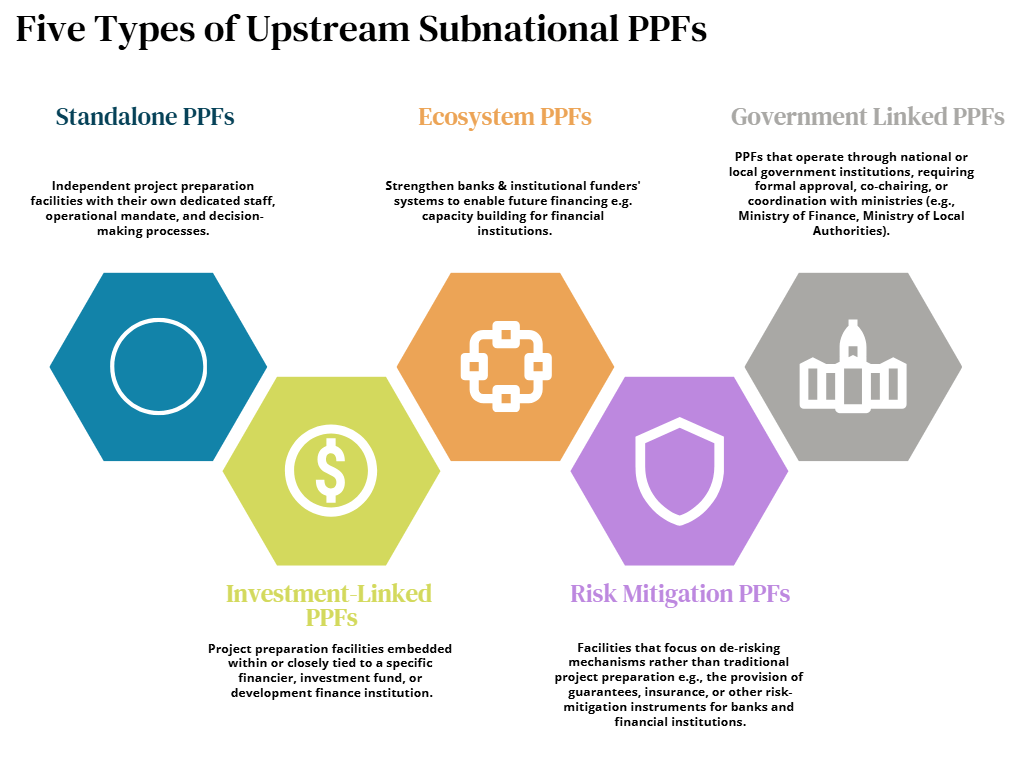
Building on this foundation, I developed a multi-axis taxonomy that captures the considerable variation between PPFs often overlooked in existing analysis, including their primary and secondary classifications, funding models, thematic focus (urban or climate) and instrument portfolio. I then analysed how subnational governments navigate 5 distinct PPF models during the earliest stages of project development, from enabling‑environment strengthening through to feasibility studies. Mapping these interactions systematically enabled me to identify recurring demand‑side bottlenecks that hinder project progression long before projects reach bankability.
This analysis led to the development of a diagnostic suite that now underpins my advisory platform:
- PPF Classification Framework – a structural taxonomy categorising upstream PPFs by institutional design and purpose.
- Multi‑Axis Taxonomy Tool – an operational framework for comparing diverse PPF models and diagnosing where constraints emerge.
- Four‑Point Bottleneck Framework – a demand‑side diagnostic identifying systemic barriers that prevent projects from progressing toward bankability.
The Four‑Point Bottleneck Framework
This framework became the centrepiece of my Individual Project. It identifies four recurring structural constraints that consistently impede project progression:
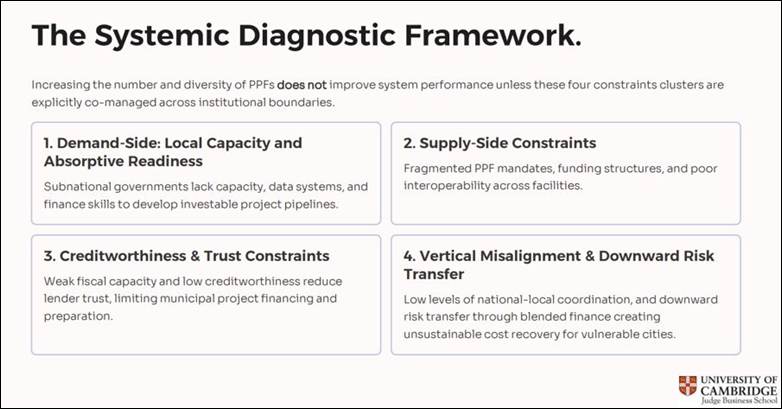
Together, these constraints reveal that the bankability challenge is not simply a shortage of project‑preparation support, but a structural design mismatch within the wider climate‑finance architecture.
Insights from the diagnostic
Applying a taxonomy‑based approach revealed that barriers to bankability are fundamentally systemic rather than facility‑specific. Despite the diversity of PPFs, challenges consistently converged around the 4 bottlenecks above. The design of individual PPFs does not eliminate project failure; rather, it influences where and how failure occurs.
These findings have important implications. Rather than proliferating new facilities, greater value lies in improving interoperability across the existing ecosystem. The greatest opportunity for innovation is not creating additional PPFs, but developing collaborative, ecosystem‑level models that better coordinate governments, development partners, financiers and technical assistance providers.
Although my research focuses on Africa, its implications extend well beyond the continent. The analytical approach can be applied wherever upstream project‑preparation systems struggle to convert viable infrastructure needs into investable projects, including South and Southeast Asia, Latin America, Small Island Developing States and even secondary cities in developed economies such as the UK and United States.
Innovate4Cities: taking the work to the UN stage
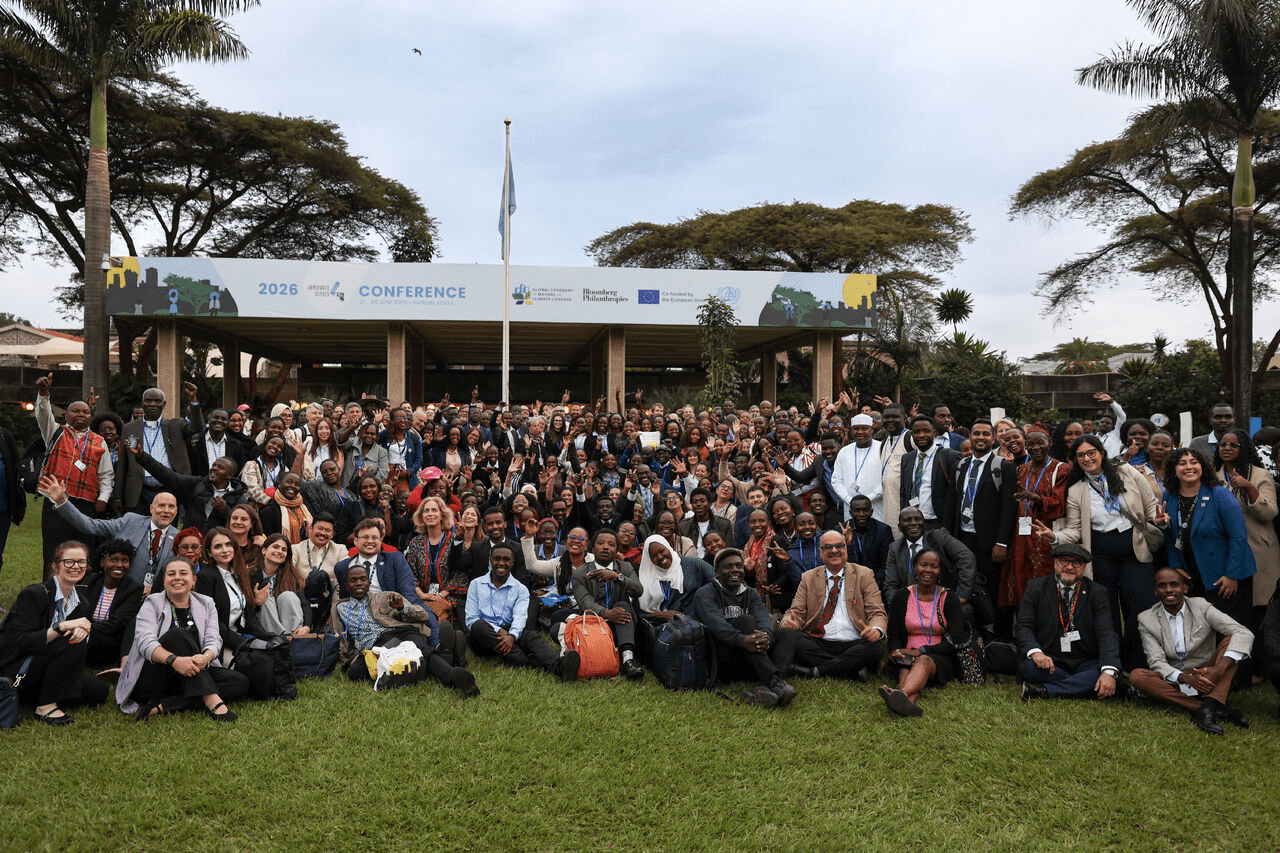
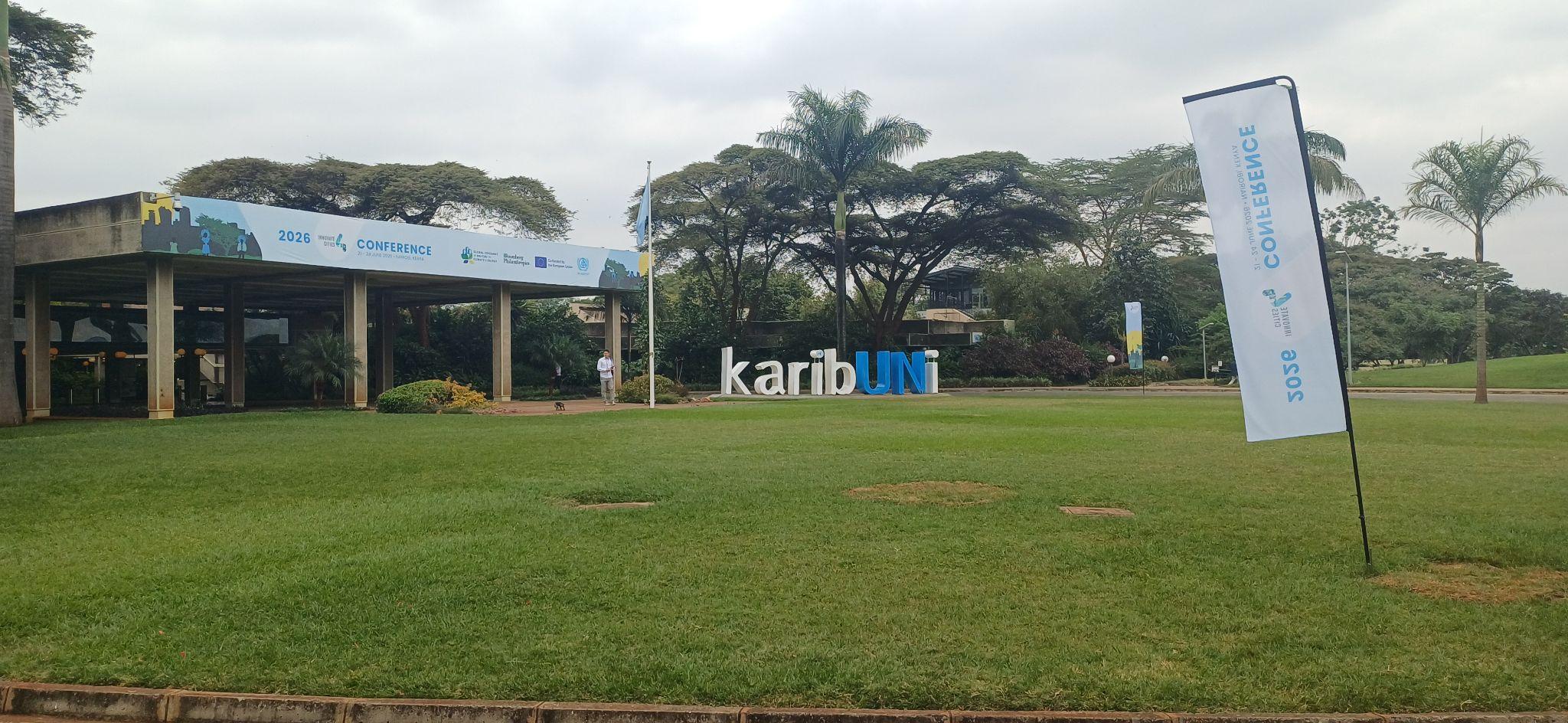
As I was finalising the first draft of my Individual Project, I received an invitation to submit a session proposal to Innovate4Cities, one of the world’s leading conferences on urban climate innovation, co‑hosted by UN‑Habitat and the Global Covenant of Mayors. With the encouragement of my supervisor and the Executive MBA programmes team, I submitted a proposal based on my research. It was accepted.
The conference, held in Nairobi in June 2026, brought together more than 1,200 researchers, practitioners and city leaders. It also hosted the largest in‑person expert review of the IPCC Special Report on Climate Change and Cities, placing urban climate action firmly at the centre of the global climate agenda. My session, held under the theme ‘Aligning Mandates with Urban Climate Finance’ focused on the diagnostic tools developed through my Individual Project. The discussion resonated strongly with participants, from city governments to DFIs and intermediaries, reinforcing the relevance of taking a systems perspective to the subnational bankability challenge and centring the perspective of cities and project sponsors. For me, this was the moment my Executive MBA journey extended beyond the classroom and began contributing to the global climate-finance conversation.

Implications for the sector – and for my trajectory
Closing the climate‑infrastructure financing gap requires more than increasing capital. It requires a fundamental shift in how project failure is understood and addressed during the earliest stages of preparation. By embedding demand‑side diagnostics within climate‑finance interventions, the institutional realities of cities can be better integrated into project preparation, improving the conversion of early‑stage concepts into bankable projects.
Although the Executive MBA is an achievement in its own right, I believe its deeper value lies in the intellectual perspective, frameworks and confidence it has given me to build something more consequential than my previous work: diagnostic tools designed to reshape how an ecosystem understands and addresses structural constraints within a trillion‑dollar bankability gap. The Cambridge experience equipped me to identify blind spots and ‘missing middle’ dynamics that often remain invisible because no single institution is designed to see the entire system.
This work has now been developed into a published working paper on SSRN, providing a formal platform to share the research contribution with a wider academic, policy and practitioner audience:
With the working paper published, the next phase involves translating research into practice, presenting findings at additional international conferences, and piloting the diagnostic suite with cities, intermediaries and financial institutions. My ambition is to reshape how climate‑finance ecosystems diagnose and address structural constraints, enabling capital to reach the cities that need it most.
The frameworks developed through this work now form the foundation of the advisory platform I am building. I look forward to collaborating with cities, ministries, DFIs and financial intermediaries to apply and scale this diagnostic suite across climate‑finance systems, turning the insights gained through the Cambridge EMBA into practical approaches that address complex global challenges.
Reflecting on the Cambridge Global Executive MBA journey, the greatest impact has been the shift from observing complex systems to developing the tools to influence them.
Leave a Reply