

A blog post by Andrew Breus (Cambridge Executive MBA 2024)
I can’t believe that 20 months have passed and my Executive MBA programme is almost done. I still remember September 2024 when I had just started and was a bit scared of how it would go. Being honest, I genuinely didn’t know what to expect. I had pretty high expectations as I was coming from the financial services sector where I had worked for 16+ years (at that time) and was asking myself whether it would be worth it, considering the high price tag and whether we would be learning anything beyond business lectures on these types of Executive MBA programmes. It’s interesting that I wasn’t the only one asking this type of question; throughout the journey, other professionals were frequently asking me similar questions about its value and whether education even pays off any more in the age of AI. I think it is a fair question and my honest answer, without hesitation, is that it has exceeded every expectation I had. Rather than sharing with you my abstract opinion, let me take you inside the actual Executive MBA experience.
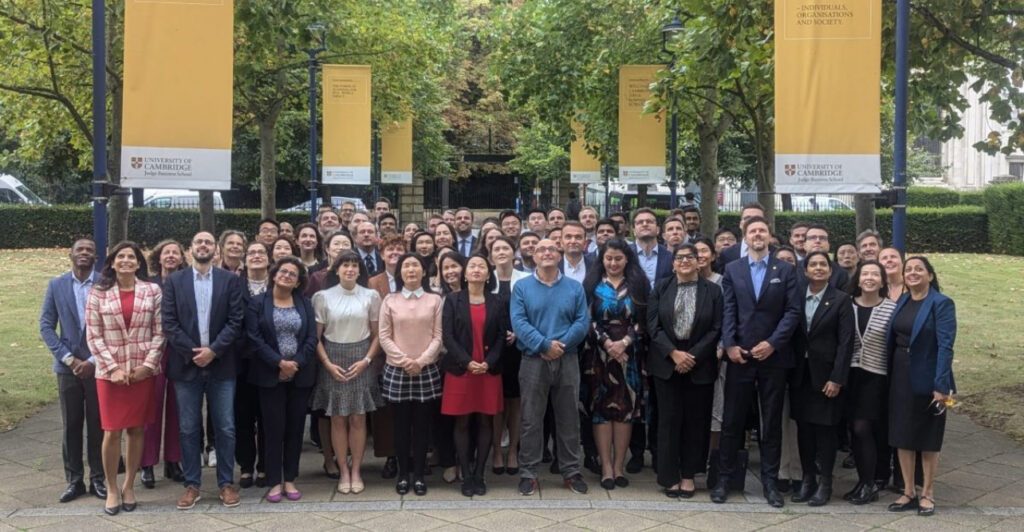
Why Cambridge, and why it was the right timing
Initially, there were 3 things that brought me here:
- I wanted to experience life outside of financial services within other sectors and connect with corporate leaders, entrepreneurs and business operators and understand how they think, what they care about and what I was missing.
- Another reason was more personal as I had carried a quiet dream since my teenage years of studying in the Cambridge Ecosystem. During my younger years, I wasn’t able to do it, but the ambition never went away. What makes Cambridge genuinely different is its depth of knowledge and access to its ecosystem that has been built over eight centuries (since 1209), with 31 Colleges and a research community that touches every discipline you could imagine. I was aware of that at that time as, in comparison with other top business schools, I was able to step outside of the business area and explore something wider beyond that.
- Finally, I wanted to sharpen my understanding of leadership, corporate governance and entrepreneurship to be able to grow to the next level as a leader.
Top 5 skills you learn during an Executive MBA that AI won’t replace
This is the part I feel most strongly about, and it kept surfacing throughout the programme in different forms. In a world where AI can produce analysis, write strategies and summarise board papers in seconds, the Executive MBA helped me to focus on the following skills:
- Increased self-awareness that helps you to experience more diverse group dynamics and get honest feedback and understand how to perform better in multiple scenarios.
- Good judgement, not just decision-making frameworks, that helps to take decision making to the next level. It includes the ability to read the room, get clarity in complex scenarios and be able to prioritise effectively.
- Working under pressure as the programme is intense by design. It teaches you to juggle multiple priorities in work, study and personal life. You learn that you could do more things than you initially thought.
- Networking and skills. Ability to get new skills and build true friendships during multiple group projects and case studies in high-performing teams.
- Tools and capabilities that will stay with you, bringing new perspectives from lectures, masterclasses and business trips.
These are the deeply individual life experiences that I personally think will be difficult to replicate for any AI model.
Cambridge life and the community
I know that people speak a lot about networking and community, but I genuinely only understood and experienced it when I became a part of the Cambridge Ecosystem. I remember my first experience during the first residential when I walked into Cambridge Judge Business School and also Downing College (where we stayed for a week) and realised the diversity of people around you and how much you could learn from them. I personally felt it was more about how people were asking questions, the depth of their thinking and the ways they approached problems with out-of-the-box solutions. The uniqueness of community here is the ability to experience diversity of experienced opinions from senior professionals in their fields as they wear different hats in different contexts.
We had multiple events happening outside of Cambridge Judge, for example, entrepreneurship, finance and technology events where I was lucky to meet a lot of inspiring leaders.
I wrote a lot about them in my LinkedIn posts that provide more context; feel free to connect with me via LinkedIn as learning is always stronger when it’s shared.
The moments that actually stay with you
Some of the most exciting parts of the programme for me were beyond lectures.
9-Day International Business Study Trip (IBST) to São Paulo, Brazil (~70% of Brazilian business accumulates here)
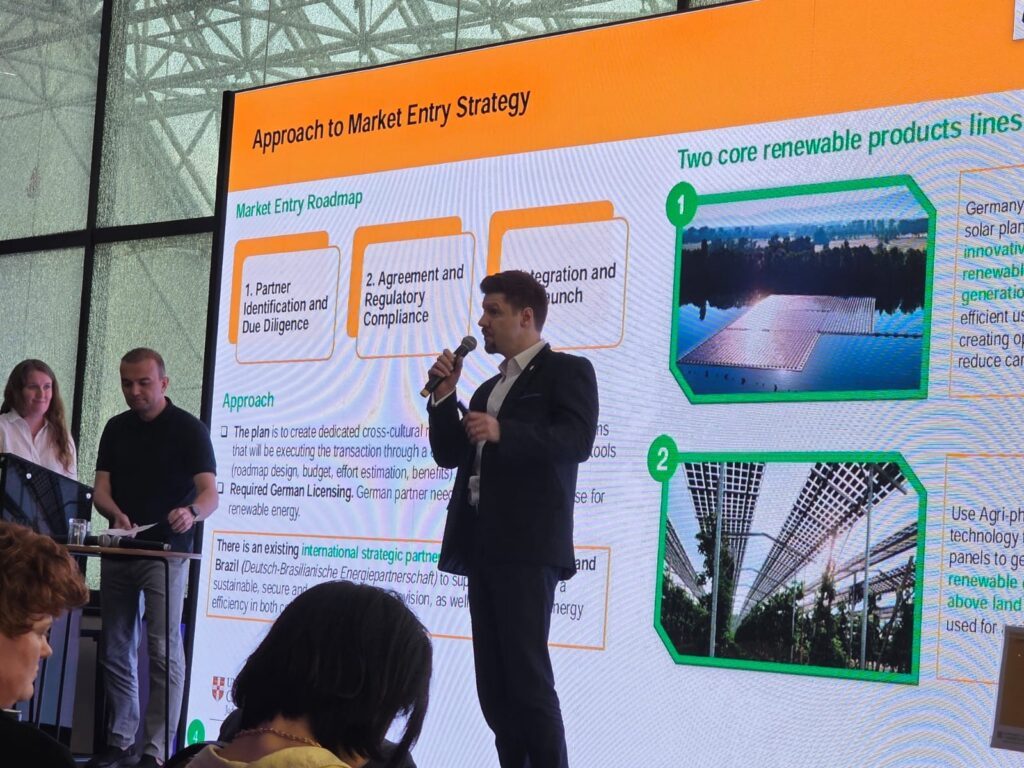
I couldn’t believe how many company visits, events and masterclasses could be included within 1 working week. Let me share a few things that I will remember:
- Natura company showed what a sustainability model actually looks like when it’s built around rare Amazonian ingredients rather than corporate pledges. I was personally impressed with their ESG-friendly manufacturing facilities in the heart of the forest.
- Schneider Electric showed me and others the approach to smart factory operations and AI twin technology that many companies are still treating as a future-state.
- IBM gave a ground-level view of AI and data analytics applications in real market scenarios. Moreover, I really enjoyed being a part of their AI role-play scenario where you sit on the board and then things suddenly go wrong with AI and what you need to do as a leader to mitigate consequences.
- Participating in the Cambridge Union Society traditional-style debates (was founded in 1815).
- Being involved in innovation forums with leading Brazilian FinTechs like Konker, Agrotools, Bars over Bottles and other companies.
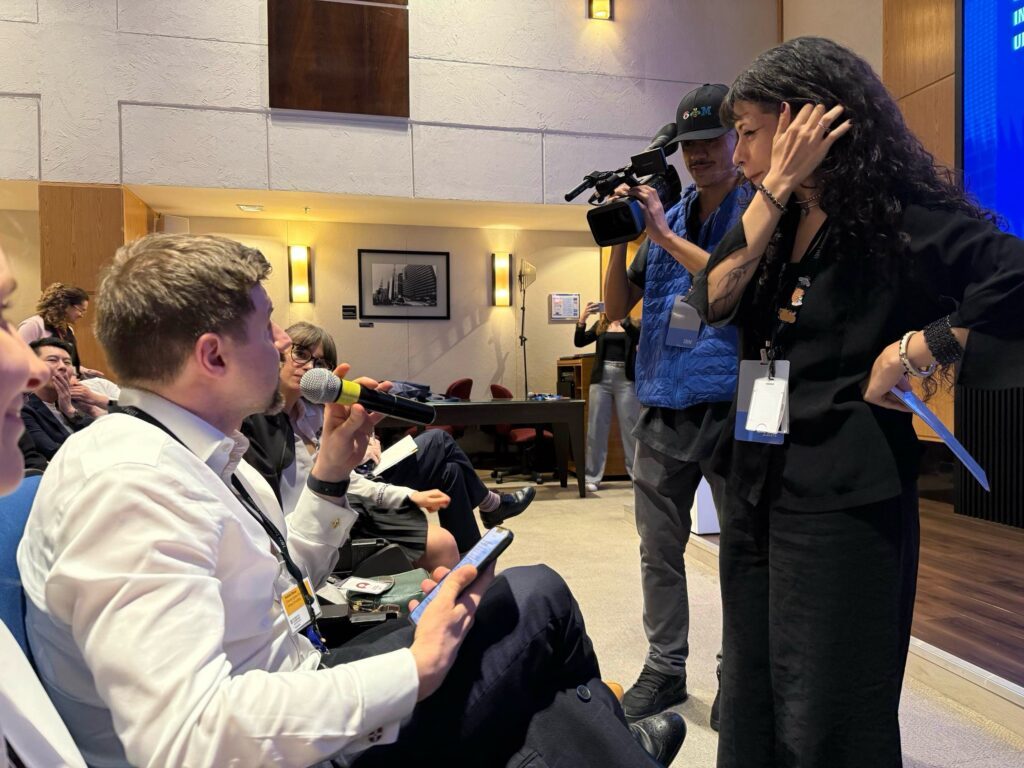
If you look back at this well-organised trip (thanks to the Executive MBA Programme team), I personally don’t think any classroom could replicate this type of experience. At the end, as a bonus, I was able to visit São Paulo Zoo with a few friends; this was completely different to the UK/Europe.
Ecosystem Week visiting ESG-leading companies
3 moments from this week I genuinely won’t forget:
- Walking through ARM headquarters, as their tech is in almost every other mobile device on the planet.
- Standing at the British Antarctic Survey holding a real 30,000-year-old piece of ice and understanding why global warming is so critical.
- Listening to two heads of ESG from Porsche and AstraZeneca explain what sustainability strategy looks like when it has to survive a quarterly earnings call. That session alone was worth a module.
If you would like to read more about Ecosystem Week, please read my blog post Rewriting sustainability strategy and exploring its GenAI angle: inside the Executive MBA’s 3-day Ecosystem Week.
Team Consulting Projects (TCP)
The programme generally requires 1 TCP project, but I was lucky to be involved in 2 TCPs, thanks to both my teams with whom I was able to deepen our friendship after this unforgettable experience.
The first one took me to on a 10-day trip to Tashkent, Samarkand and Bukhara where our TCP team was working with one of Uzbekistan’s leading private universities helping to transform it into the market leader in Central Asia. We focused on advancing educational, operational and financial strategies (based on the UK and the US best practices).
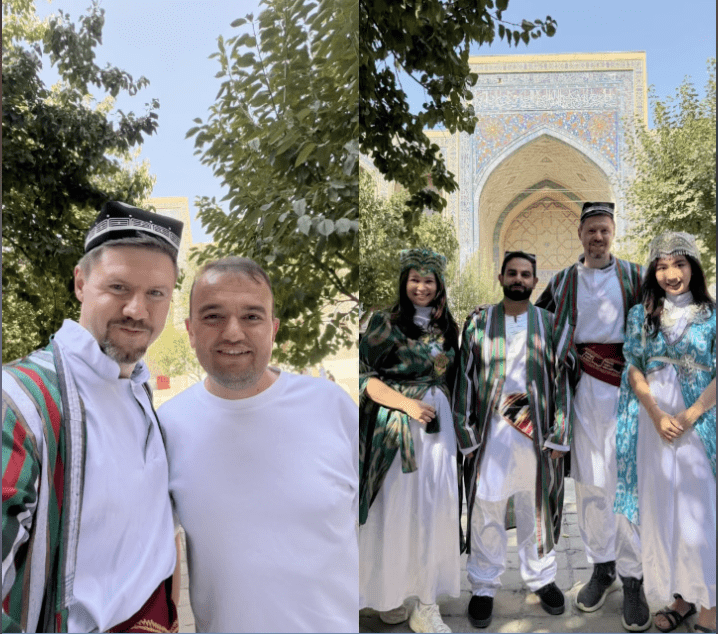
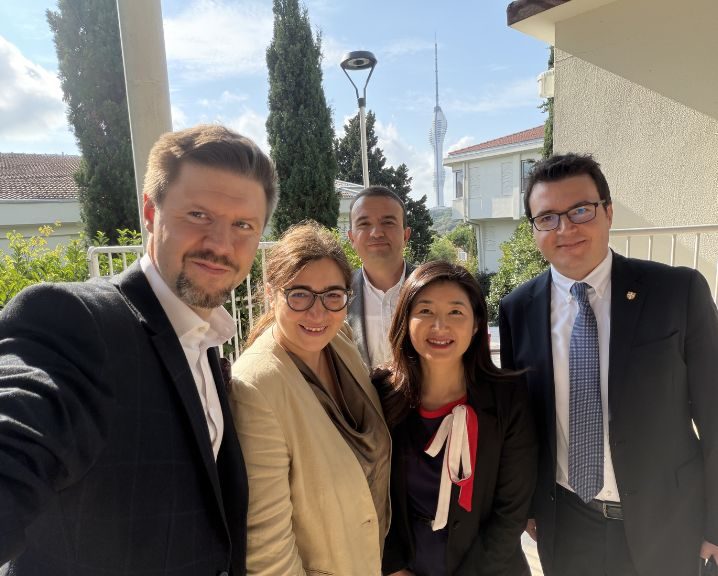
The second TCP was with another team that took a 3-day trip to Istanbul to work on private equity, combining work on business diagnostics and design thinking around business opportunities and forward-looking strategy.
Electives Week
Electives Week is a unique Cambridge tradition that takes place each February. Current students and alumni meet during a 4-day study week and have the opportunity to network and participate in masterclass courses. I selected the Effective Director (2-day) and Mergers & Acquisitions (2-day) electives that helped me to strengthen my corporate governance and financial modelling skills. Beyond that, there were multiple activities and dinners that made the experience truly transformative and unforgettable. In these moments, you understand that community is a long-term asset.
The texture of wider experience
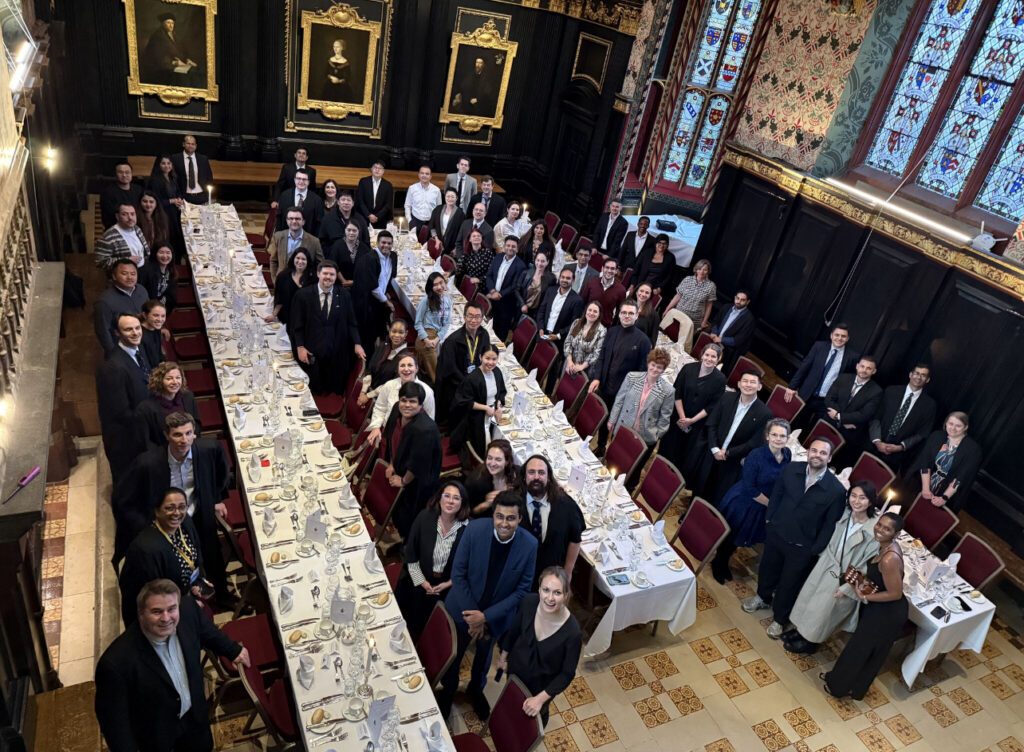
There were various College dinners where I met amazing people, guest speakers who have actually done what they’re describing, and masterclasses covering negotiation, personal brand, presentation skills and the non-executive director type of roles. Individually it was memorable but, over a 20-month period, these experiences compound into something genuinely different.
Few personal growth reflections
The programme will test your capacity to hold competing demands simultaneously, and that is entirely intentional, as prioritising is not an easy thing under pressure (trust me, as I have experienced it multiple times over the last few years). During the Executive MBA programme, I was managing active client and consulting work, writing numerous individual and group assignments and preparing for the exams.
Reflecting back, my self-awareness deepened in ways I didn’t entirely anticipate. I genuinely became aware of my communication patterns, my responses under pressure and my leadership defaults at a level I simply didn’t have access to previously. When you work alongside different personalities who are coming from different professional and cultural backgrounds, you face your real self and external pressures, starting to learn and adapt pretty quickly.
One suggestion from me is to be clear what are you trying to get out of the Executive MBA before you start as this will help you with prioritisation. Cambridge Judge Business School and the wider Cambridge Ecosystem offer an enormous amount of different things, whether these are entrepreneurship societies, corporate governance masterclasses, research events or global trips. From my experience I can say that, without a clear sense of what you’re there to get, you will spread yourself out too much. That is where you learn to prioritise under pressure.
My final thought
20 months, 3 international trips, new friends for life, hundreds of conversations, numerous masterclasses and lectures.
Big thanks to my wife Kate, parents, friends and cohorts for being supportive and making this experience unique.
Separate thanks to the Executive MBA Programme team for making this experience so structured and smooth.
As my final thought here, I want to quote Carl Jung with his famous saying: “Until you make the unconscious conscious, it will direct your life and you will call it fate.” I personally think that these 20-months helped me to explore, understand and transform a big chunk of my unconscious into tangible life experience and insights, whether it was related to family, business or studies.
Leave a Reply