

By Abigail Hallows, Executive MBA 2022
At the end of October 2025, 6 EMBA students and alumni visited Bengaluru and Hyderabad on the inaugural EMBA India Trek. Organised by Jigar Patel and Evani Manur, alongside local experts, the Austral Group, the trek included visits to over 10 innovation ecosystem stakeholders, including companies and not-for-profit organisations across two cities – Bengaluru, known as the Silicon Valley of India, and Hyderabad, the pharmaceutical innovation centre of India. The aim of the trek was to learn more about the innovation happening in India across industries. This blog includes summaries of the visits and the group’s perspective on what we learnt.
Ather Energy
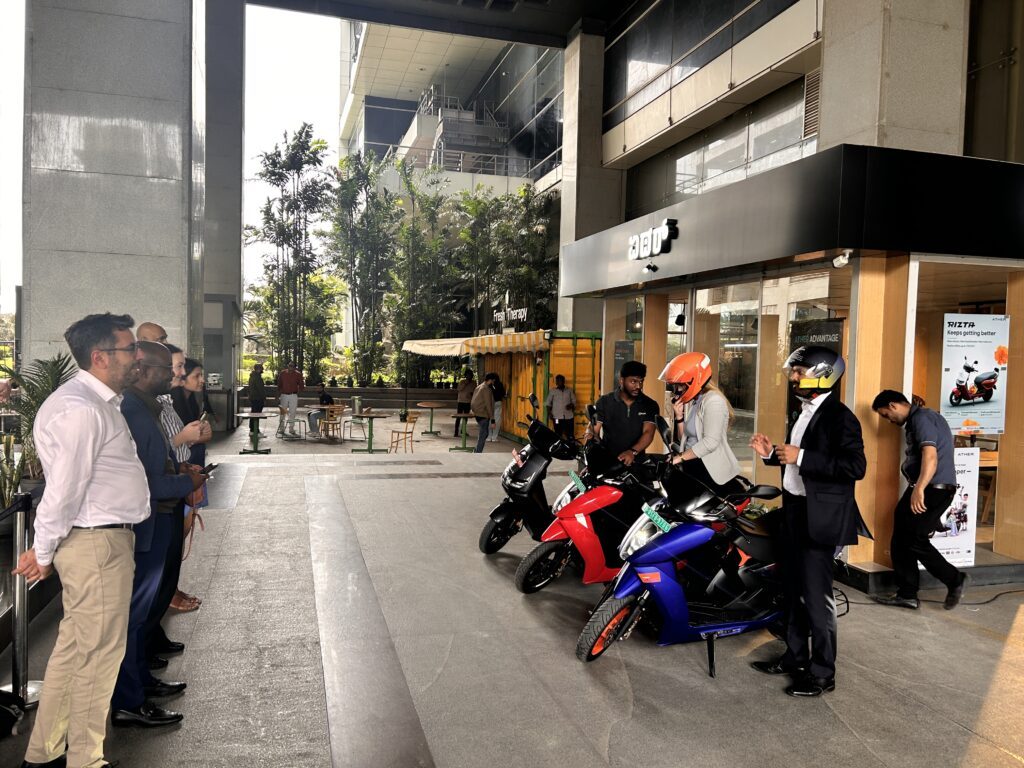
Ather Energy is an Indian electric two-wheeler manufacturer headquartered in Bengaluru. It was founded by Tarun Mehta and Swapnil Jain in 2013. Ather Energy manufactures electric scooters, including the Ather 450 series and Ather Rizta. It is one of India’s largest electric two-wheeler manufacturers with competitors including Ola Electric, TVS Motor Company and Bajaj Auto. It has also established an electric vehicle charging network across India called the Ather Grid.
Ather Energy was our first visit where, under supervision, we were permitted to ride some of their electric two-wheeler models. Ather Energy have focused solely on creating products that perfectly match the needs of the consumer in India – they spent the first years of their existence perfecting the 340 model before considering additional offerings. This is a perfect example of customer focus and building products based on real customer needs.
Infosys
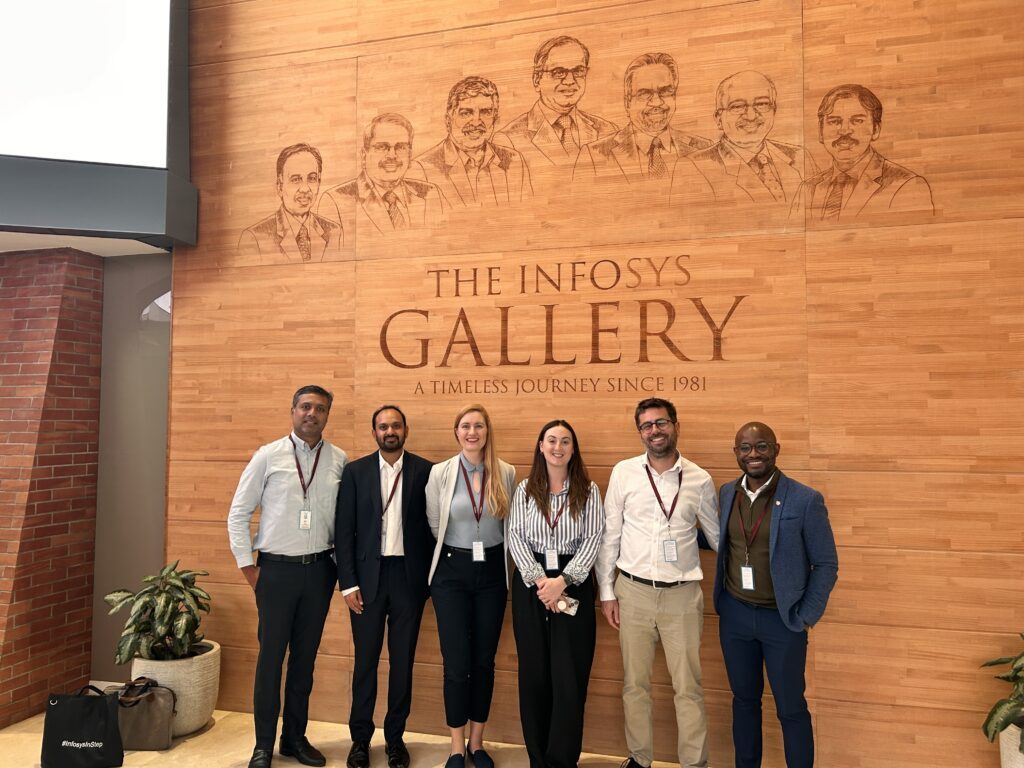
Infosys is a technology company that offers information technology, business consulting and outsourcing services. Founded in 1981 by 7 engineers, the company is headquartered in Bengaluru and considered one of the Big Six Indian IT companies. Now employing over 300k staff and with clients all over the world, Infosys is a leading international consulting partner.
The headquarters in Bengaluru sits on an enormous 35-acre campus – we had the good fortune of experiencing a full campus tour and having lunch before meeting senior executives. We learnt about Infosys Topaz, their consulting focus on AI transformation and discussed the risks in their industry from the unstable geopolitical environment.
Beckn Protocol
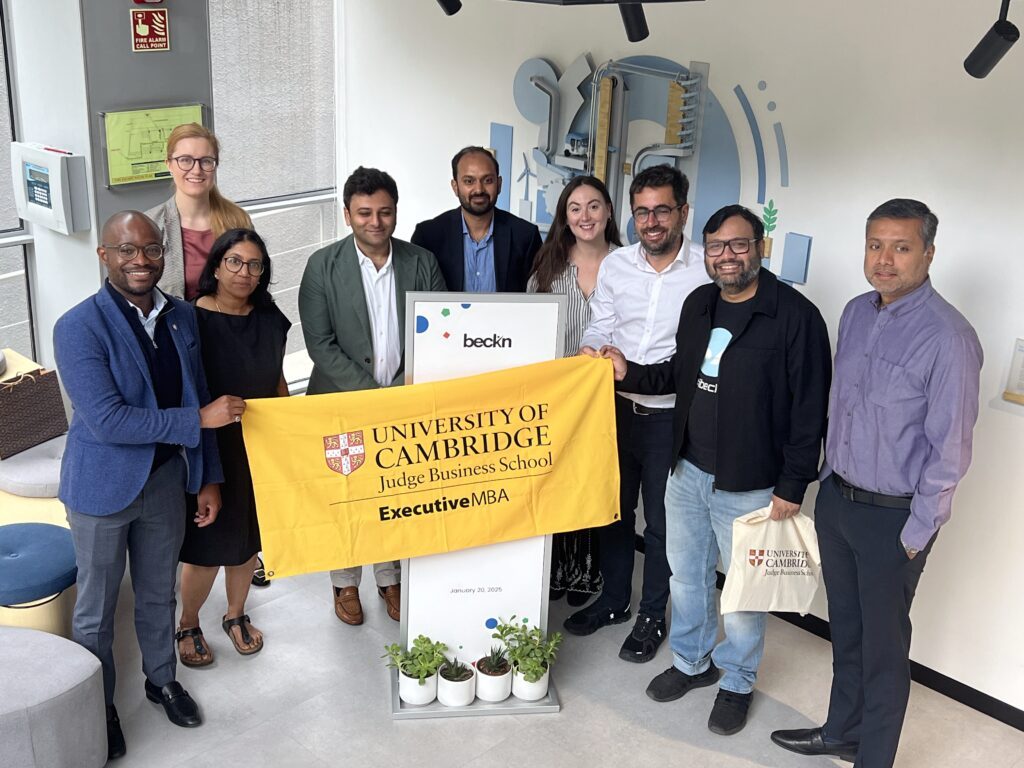
Beckn Protocol is an open-source project founded in 2019 to create a decentralised digital ecosystem for commerce and services. It uses a set of standardised APIs to enable different platforms to communicate and transact directly without a central intermediary. This technology is being used to build open and inclusive networks for various sectors, such as e-commerce, mobility and other services.
What was so impressive about Beckn Protocol and eGov (the next visit) is the focus on creating open-source building blocks that empower others to innovate and transform more easily. They are social-good enterprises that have already contributed positively to advances in society.
eGov
eGov is a global, mission-driven organisation and a catalyst for digital transformation in public service delivery. Their open-source platform, DIGIT, enables countries and local authorities to build and scale digital public infrastructure (DPI) across sectors like health, sanitation, water, public finance and climate.
Not only are eGov empowering municipalities in India, but their DIGIT platform is also being used in other developing nations, including Mozambique. The team at eGov consult with potential customers to show them how they can leverage DIGIT for their needs and become self-sustaining.
Ultraviolette
Ultraviolette Automotive is an innovator in sustainable mobility and energy infrastructure. Established in 2016, the company was born out of the unique vision of creating top-of-the line mobility solutions driven by progressive design and energy-efficient technology. Ultraviolette Automotive is developing India’s first ecosystem of high-performance electric vehicles and future-ready energy infrastructure.
It was exciting to see world-class electric motorbikes developed by two school friends after they gained experience from universities and international businesses. Ultraviolette bikes are on the international stage at the International Motorcycle and Accessories Exhibition in Milan where they showcase their F99 model that has a top speed of 265 km/h and is able to accelerate 0-100 km/h in 3 seconds.
Vidhana Soudha
In the evening, after riding on female-driven tuk-tuks (an initiative run by Herbalife), we were given a tour of the incredible State Building of Karnataka. Completed in 1956, the architect Hanumanthaiah famously envisioned the building to embody Indian architectural design. His vision was shaped in response to a query from a Russian cultural delegation, which questioned whether India had its own architectural identity. Hanumanthaiah expressed his desire to create a structure that reflected India’s rich heritage, distinct from European styles.

Kamya Buch
Kamya joined us for dinner at The Oberoi where we talked about her journey to spirituality and how she aims to rediscover and teach others about the lost traditions of Hinduism. We discussed the growing wellness industry in India and the benefits that world leaders have experienced from experiencing traditional Hindu practices.
VC panel
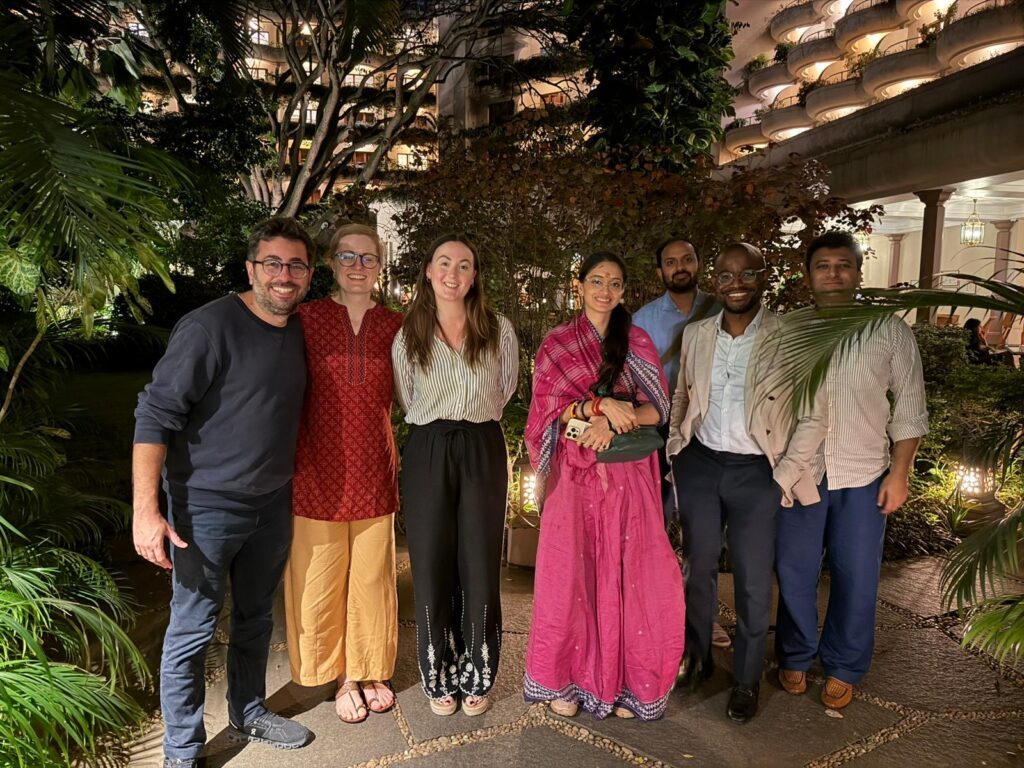
In a VC panel at the Oberoi hotel, we had the pleasure of hearing from Mr Parthasarathy NS (Partner, Mela Ventures & Co Founder Mindtree Ltd), Mr Sherif Kottapurath (Founder, Mount Judi Ventures) and Mr Anand Ganesh (CEO, NSRCEL, IIM-Bangalore). The moderator was Santosh Joseph (Founder at Germinate Investor Services LLP). These panellists have seen first-hand the IT transformation across India in the course of their career – we talked with them about their role in the VC ecosystem, how they find and support local startups and the role of government in the startup environment – a key quote being that the IT industry in India succeeded despite involvement from the Government.
Fibroheal
Fibroheal is a leading biotech and healthcare startup company working exclusively on ‘silk proteins’ as ‘biomaterial for wound healing’, focused on active and advance-wound care management. They are among the few companies working across the globe on non-textile application of ‘silk protein’ as a versatile biomaterial in biomedical use.
We were lucky enough to visit their manufacturing site, including their R&D lab and supply chain processes. Using a waste product from the silk textile industry, Fibroheal have patented processes to convert these waste materials into industry-grade wound-care materials. The visit included a guided tour of their state-of-the-art ISO 13485 and GMP-certified facility, an interaction with the leadership team and insights into their innovative, IP-protected technologies for acute, chronic and difficult-to-heal wounds. We gained an understanding of how Fibroheal combines biomaterials expertise with biomedical engineering to develop cost-effective, globally competitive wound care solutions.
Dr Reddy’s
Dr. Reddy’s Laboratories is a global pharmaceutical company known for its innovation in generic medicines, biologics and active pharmaceutical ingredients. Our visit to their Hyderabad plant included an introduction to the company’s R&D overview, a guided tour of their R&D labs, and a visit to 2of their state-of-the-art manufacturing facilities. We explored the biologics labs and plant, interacted with senior leadership and gained insights into cutting-edge pharmaceutical research, development and manufacturing processes.
Charminar
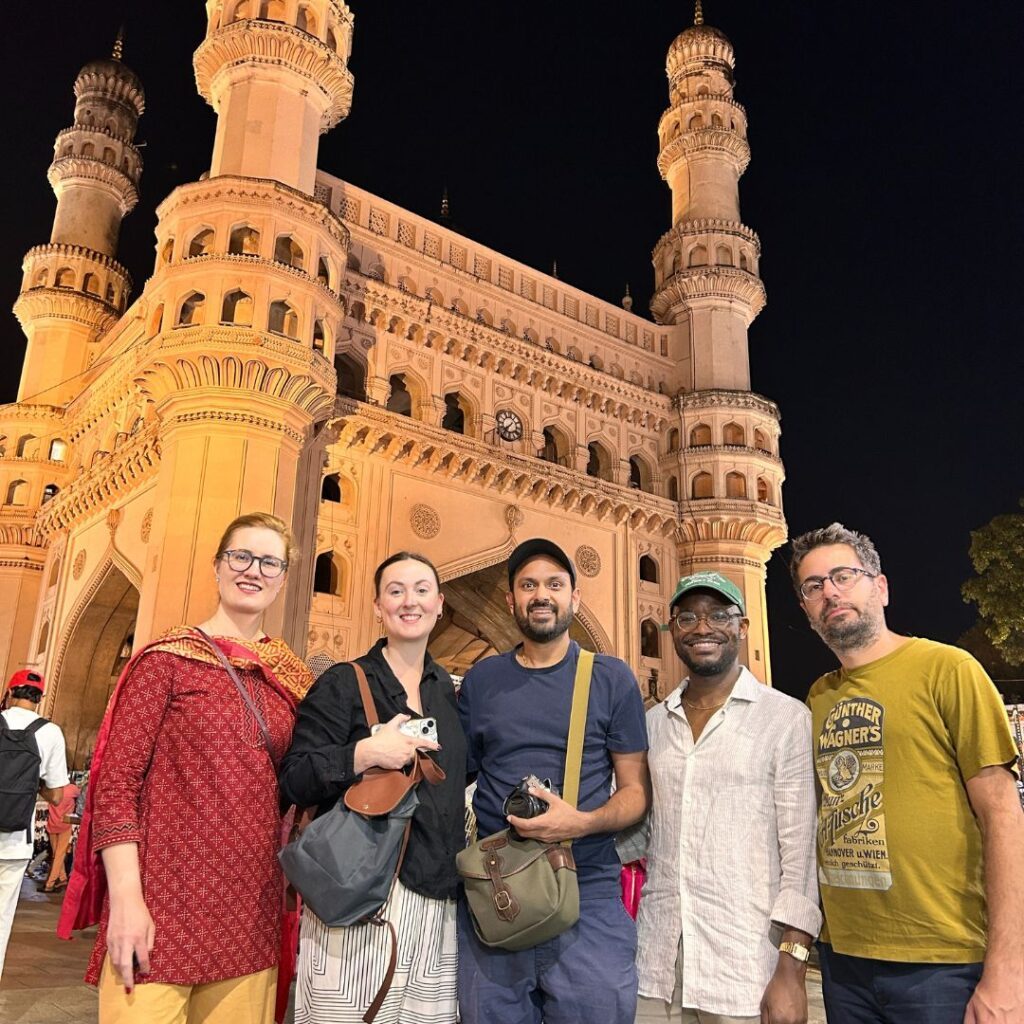
In the evening, we enjoyed a walking tour through the old town of Hyderabad to the Charminar, a magnificent architectural masterpiece and a symbol of Hyderabad, a city rich in culture and history. It features a four-sided archway and was said to have been built to thank Allah for ridding the city of the Plague.
Autrocracy
Autocracy Machinery Pvt Ltd is a leading Indian manufacturer of specialty construction, agricultural and infrastructure machinery and attachments. The visit included a guided tour of their state-of-the-art manufacturing facility, an interaction with the leadership team and insights into their customised machines used for trenching, cable laying, drainage and irrigation projects.
During our visit, we learned how the company leverages its in-house R&D and innovative technologies to design world-class, impact-driven machinery, supporting India’s vision as a global manufacturing and innovation hub. This visit was truly engaging, thanks to the founding team allowing us to operate some of their prototypes under supervision.
T-Hub
T-Hub is an innovation intermediary and business incubator in Hyderabad, built on the triple helix model that brings together the Government of Telangana, leading academic institutions and the private sector. Positioned as a central node in the region’s entrepreneurial ecosystem, it connects startups with corporates, investors, researchers and policymakers.
One notable observation from the visit was the deliberate investment in physical and institutional infrastructure to enable innovation. The T-Hub building is located within a newly developed commercial district, surrounded by major corporates such as AMD and large financial institutions. This reflects a proactive, planned approach to ecosystem-building in Hyderabad, where government and industry have played a visible role in shaping an innovation corridor.
This contrasts with the innovation environment in Bengaluru, which has historically grown more organically, driven by market demand, talent concentration and the emergence of startups that later expanded into global-scale firms. While Bengaluru’s ecosystem appears to have developed bottom-up, Hyderabad’s seems more intentionally designed from the outset. These are observations on two different pathways for ecosystem development – one evolutionary, the other more planned.
During our visit to T-Hub, we toured the space and explored an exhibit area showcasing products and services developed by supported startups. We also held discussions with startup teams, who shared their pitch decks and insights into their growth journeys, demonstrating how the curated environment can accelerate early-stage innovation.
Concluding remarks
Innovation in India is thriving, anchored in purpose, process and people. There is no replacement for on-the-ground visits to appreciate the dynamism of the economy. A few core takeaways are:
- Made in India for the World.
Indian enterprises are creating world-class products across sectors including automobiles, technology and pharmaceuticals. The distinction between “Make in India for India” and “Make in India for the World” is essential. Many leading firms are generating significant global revenues through sharp customer insight, product excellence and cost consciousness.
Examples: Infosys, Dr Reddy’s, Ultraviolette. - Innovation through process and precision.
Indian innovation often flourishes through process efficiency and the intelligent use of limited resources, enabling speed, affordability and scalability. Professor Jaideep Prabhu describes this ss ‘Jugaad Innovation’ (frugal innovation). At the same time, there are growing examples of deep technological leadership where precision meets vision.
Examples: Dr Reddy’s, Autocracy.
- Building for scale.
The most successful companies keep a constant focus on scale at an early stage. Their systems, teams and products are designed to grow sustainably and serve large markets. No surprise for a nation of 1.4 billion.
Examples: Infosys, Dr Reddy’s, eGov, FIDE. - Values-driven leadership.
India’s strongest companies are defined by culture and long-term thinking rather than short-term rhetoric. They demonstrate their values through consistency that is not immediately visible externally. It can be found in the loyalty of long-serving executives and deep curiosity about customer needs. This culture distinguishes those that sustain performance from those that struggle in execution.
Examples: Infosys, Autocracy, Ather
Leave a Reply